

Why High-Quality Food Matters for Your Maine Coon: Protein, Wet Food & Lifelong Nutrition

Choosing the best food for your Maine Coon is one of the most important decisions you will make as a cat owner. Maine Coons are a large, slow-maturing breed, and kittens have significant nutritional needs as they grow and develop. Understanding cat food ingredients, protein, moisture, wet food, dry food, and proper portion sizes can help you make better choices for your Maine Coon throughout every stage of life.
At Elara Eclipse Maine Coon Cattery, we believe nutrition is an important foundation of raising healthy, thriving kittens. While genetics, veterinary care, preventative care, exercise, environment, and lifestyle all contribute to a cat's overall health, feeding a complete and balanced, high-quality diet is one of the things you can control every single day.
Why Quality Cat Food Matters for Maine Coons
Walk into almost any pet store and you'll find an overwhelming number of cat food choices. There are inexpensive foods, premium foods, grain-free formulas, wet foods, dry foods, kitten foods, adult foods, limited-ingredient diets, and countless different brands and recipes.
So how do you know what is actually a good choice?
The first step is learning to look beyond the front of the package.
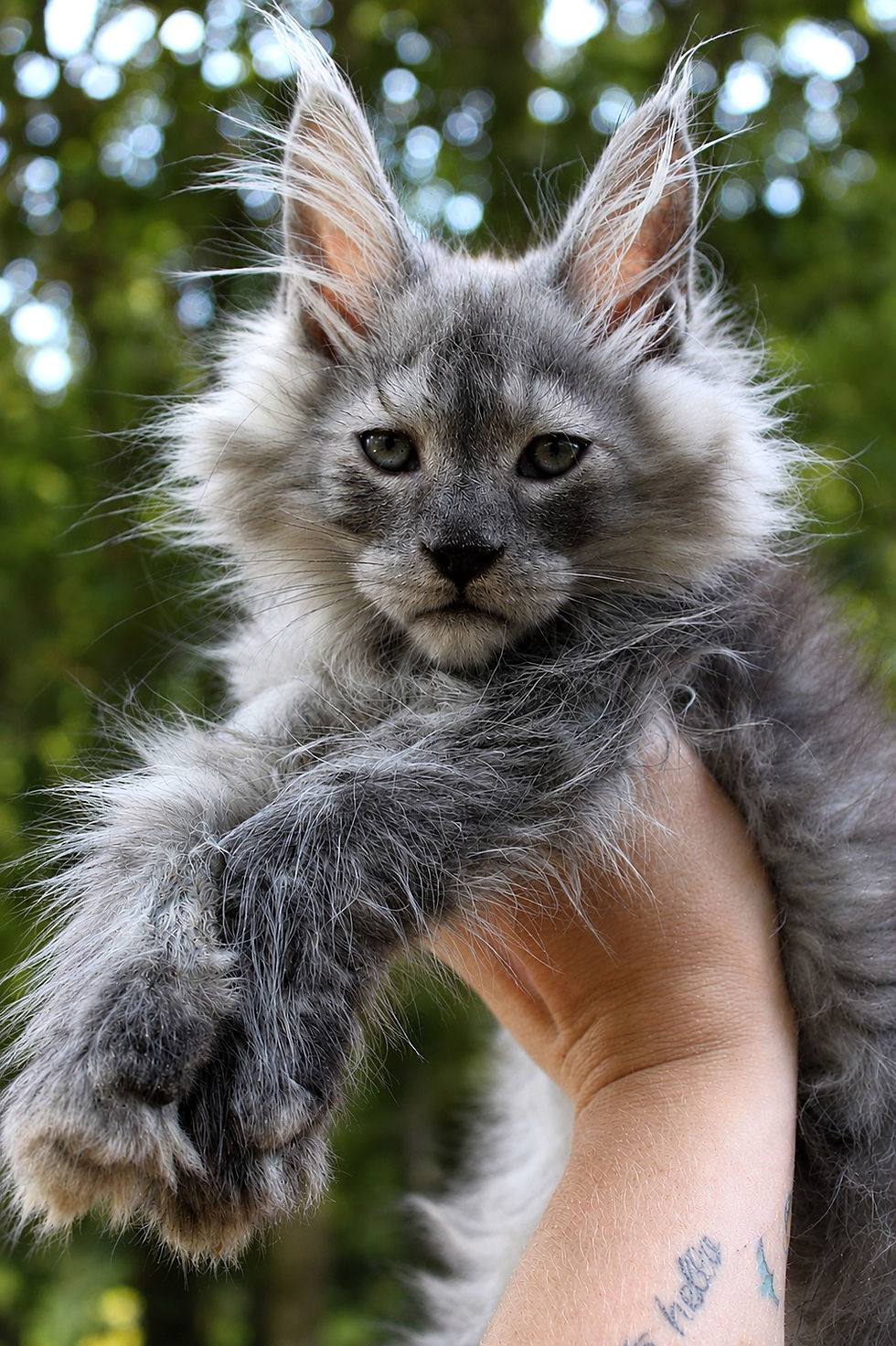
Beautiful Maine Coon pictures, words like "natural," and marketing claims can catch your attention, but they don't tell you everything you need to know about the nutritional quality of a food.
Turn the package around and read the ingredient list and nutritional information.
Look for a food that is formulated to provide complete and balanced nutrition for your cat's specific life stage, and pay attention to the quality and sources of the nutrients being provided.
Why Protein Is So Important for Maine Coon Cats
Cats are obligate carnivores, meaning their bodies are specifically adapted to obtain essential nutrients from animal-based foods.
Protein provides amino acids that are necessary for normal muscle development, tissue maintenance, growth, and numerous biological processes.
This makes protein particularly important during kittenhood.
Maine Coon kittens have a tremendous amount of growing and developing to do. Their bodies are developing their bones, muscles, organs, nervous system, and other tissues while they are simultaneously becoming more active and independent.
A quality diet needs to provide appropriate amounts of high-quality protein and other essential nutrients to support that development.
>Look for Quality Protein Sources
When comparing foods, take a look at the ingredients.
You want to understand where the protein and other nutrients in the food are coming from rather than choosing a product based solely on a percentage printed on the front of the bag.
A food can advertise a high protein percentage, but protein percentage alone doesn't tell you the entire nutritional story.
The source, digestibility, overall formulation, calorie density, fat content, vitamins, minerals, and whether the food is complete and balanced all matter.
That's why choosing a food should be about looking at the whole nutritional profile, not just finding the highest protein number possible.
Think About Cat Food Like You Think About Your Own Diet
One of the easiest ways to understand why food quality matters is to compare it to our own nutrition.
Imagine eating fast food for every meal.
You might consume enough calories to get through the day, but that doesn't necessarily mean you're giving your body the variety and quality of nutrients it needs for optimal nutrition.
Now compare that with eating a balanced diet containing quality sources of protein, healthy fats, fruits, vegetables, whole grains, and other nutrient-rich foods.
The difference isn't simply about how much you're eating.
It's about what you're eating.
Your Maine Coon depends entirely on you to make those nutritional decisions for them.
They can't read the ingredient label.
They can't compare brands.
They can't decide whether their food is appropriate for their age.
You are their nutritionist, grocery shopper, and chef all in one.
That makes choosing an appropriate diet an important part of responsible pet ownership.
Wet Food Is Just as Important as Dry Food
One of the biggest misconceptions I see when discussing cat nutrition is the idea that wet food is simply an optional treat.
I believe wet food deserves an important place in a Maine Coon's daily feeding routine.
Dry food can absolutely be part of a healthy diet when it is appropriately formulated and complete and balanced. However, wet food offers a major nutritional advantage that dry food cannot provide in the same way:
Moisture.
Most wet cat foods contain a significant amount of water. This means your cat is getting hydration while eating their meal, rather than having to obtain all of their water separately from a bowl.
This can be particularly valuable because cats don't always have a strong thirst drive.
A cat eating primarily dry food needs to drink enough water separately to meet its hydration needs. Adding wet food provides another opportunity to increase daily moisture intake.
Why Hydration Matters for Maine Coon Cats
Water is essential for normal body function.
Adequate hydration supports normal physiological processes throughout the body, including normal urinary function.
This is one reason I don't view wet food as merely a special occasion food.
Wet food can be an important component of a well-rounded feline diet.
That doesn't mean wet food prevents kidney disease, urinary disease, or other medical conditions. No food can guarantee that a cat will never develop a health problem.
Genetics, age, environment, underlying health conditions, preventative veterinary care, and many other factors all play a role.
However, providing moisture through food is a practical way to support your cat's overall hydration.
And that is something worth considering when building your Maine Coon's daily feeding routine.
Wet Food and Dry Food Can Work Together
For many Maine Coon families, feeding a combination of both can work beautifully.
Wet food can provide additional moisture and variety, while dry food can provide convenient, nutrient-dense meals that are easy to measure and store.
The important thing is making sure the foods you choose are nutritionally appropriate and that the total amount being fed matches your individual cat's needs.
For example, a Maine Coon might have scheduled wet food meals while receiving an appropriately measured amount of dry food as part of their daily diet.
There isn't one feeding schedule that works perfectly for every cat.
Your Maine Coon's nutritional requirements can change based on:
Age
Growth stage
Activity level
Body condition
Metabolism
Health status
Calorie density of the food
Individual nutritional needs
This is why your veterinarian can be an important partner when determining how much your individual cat should eat.
Wet Food Can Also Help With Food Variety
Another benefit of incorporating different appropriate food textures into your kitten's routine is helping them become comfortable with variety.
Some cats become extremely selective eaters when they are exposed to only one food or texture for years.
Introducing appropriate wet food and different textures while your cat is young can help them become more accustomed to eating different forms of nutritionally appropriate food.
This doesn't mean you should constantly change your kitten's diet.
Sudden dietary changes can cause digestive upset.
Instead, when making changes, transition foods gradually and pay attention to how your kitten responds.
Don't Forget Fresh Drinking Water
Even if you feed wet food, your Maine Coon should always have access to fresh, clean drinking water.
Some cats prefer fountains.
Others prefer traditional bowls.
Some like wide, shallow dishes.
Others don't care at all.
You can experiment to discover what your individual cat prefers.
The important thing is that fresh water is always available.
Wet food should complement access to drinking water—not replace it.
Does High-Quality Food Prevent Health Problems?
This is an important question, and the answer requires some clarification.
No diet can guarantee that your Maine Coon will never develop a health condition.
Maine Coon health is influenced by genetics, inherited traits, environment, preventative veterinary care, lifestyle, age, and many other factors.
However, providing a nutritionally complete and balanced diet can help support normal growth and development and may reduce the risk of problems associated with inappropriate nutrition, such as nutritional deficiencies, unhealthy body condition, and inadequate nutrient intake.
Proper nutrition can also support:
Healthy muscle development
Normal growth
Healthy skin and coat
Normal immune function
Healthy body condition
Normal energy levels
Normal digestive function
Overall nutritional wellbeing
Think of nutrition as one important piece of a much larger health puzzle.
Good food doesn't replace veterinary care—but it gives your cat a strong nutritional foundation.
Maine Coon Kittens Need Special Attention to Nutrition
Maine Coon kittens are not simply miniature adult cats.
Growing kittens have different nutritional requirements than adult cats, which is why choosing a food formulated for the appropriate life stage is so important.
Maine Coons are also known for their extended growth period compared with many other cat breeds.
Their development happens gradually, and healthy growth should always be the goal.
Bigger Isn't Always Better
This is something every Maine Coon owner should understand.
It can be tempting to want your Maine Coon to become as large as possible.
But trying to make a Maine Coon grow faster isn't the same thing as supporting healthy growth.
Overfeeding can lead to excessive weight gain and put unnecessary stress on the developing body.
The goal should be a healthy body condition and appropriate development—not simply chasing a number on the scale.
Don't Assume the Most Expensive Food Is Automatically the Best
Quality nutrition doesn't mean you have to purchase the most expensive food on the shelf.
Price alone doesn't determine nutritional quality.
Instead, learn how to evaluate the food itself.
Ask:
Is it complete and balanced?
Is it appropriate for my cat's life stage?
What are the primary protein sources?
What is the calorie density?
Does it provide appropriate levels of essential nutrients?
Will my cat actually eat it consistently?
Does it fit my veterinarian's recommendations for my individual cat?
Those questions are much more useful than simply asking whether a food is expensive.
Portion Control Matters Too
Even an excellent food can contribute to unhealthy weight gain if your cat is consistently overfed.
Maine Coons are large cats, but that doesn't mean they should be allowed unlimited amounts of food simply because they're a large breed.
Portion requirements vary between individual cats.
A highly active young Maine Coon kitten may need considerably more calories than a sedentary adult.
Your cat's body condition is more meaningful than simply looking at the number on the scale.
Regularly monitor your Maine Coon's weight and body condition and discuss changes with your veterinarian.
Nutrition Is an Investment in Your Maine Coon
Feeding a high-quality diet can cost more than choosing the least expensive food available.
But consider what you're actually purchasing.
You're providing the nutrition your cat depends on every single day.
One meal doesn't determine your Maine Coon's health.
One can of food doesn't determine their future.
But thousands of meals over the course of their lifetime become a significant part of their overall care.
That's why I encourage Maine Coon owners to think about food as an investment in their companion, rather than simply another household expense.
The Bottom Line: Feed the Whole Cat, Not Just the Bowl
There is no magical food that guarantees perfect health.
There is no ingredient that makes one food automatically perfect for every Maine Coon.
And there is no substitute for regular veterinary care.
But there are things you can do every day to support your cat's health.
Choose a complete and balanced diet appropriate for your cat's life stage.
Look for appropriate, quality sources of animal-based protein.
Include wet food as an important source of dietary moisture.
Use dry food appropriately if it works for your cat.
Provide fresh drinking water every day.
Monitor portions and body condition.
Avoid rapid dietary changes.
And work with your veterinarian when your cat's nutritional needs change.
Most importantly, remember that nutrition is only one part of responsible Maine Coon ownership.
Your gentle giant also needs regular veterinary care, preventative care, exercise, mental enrichment, grooming, socialization, a safe environment, and plenty of love.
You can't guarantee your Maine Coon will never have a health problem. But you can give them the nutritional foundation they need to grow, thrive, and enjoy the best life possible. ❤️🐾