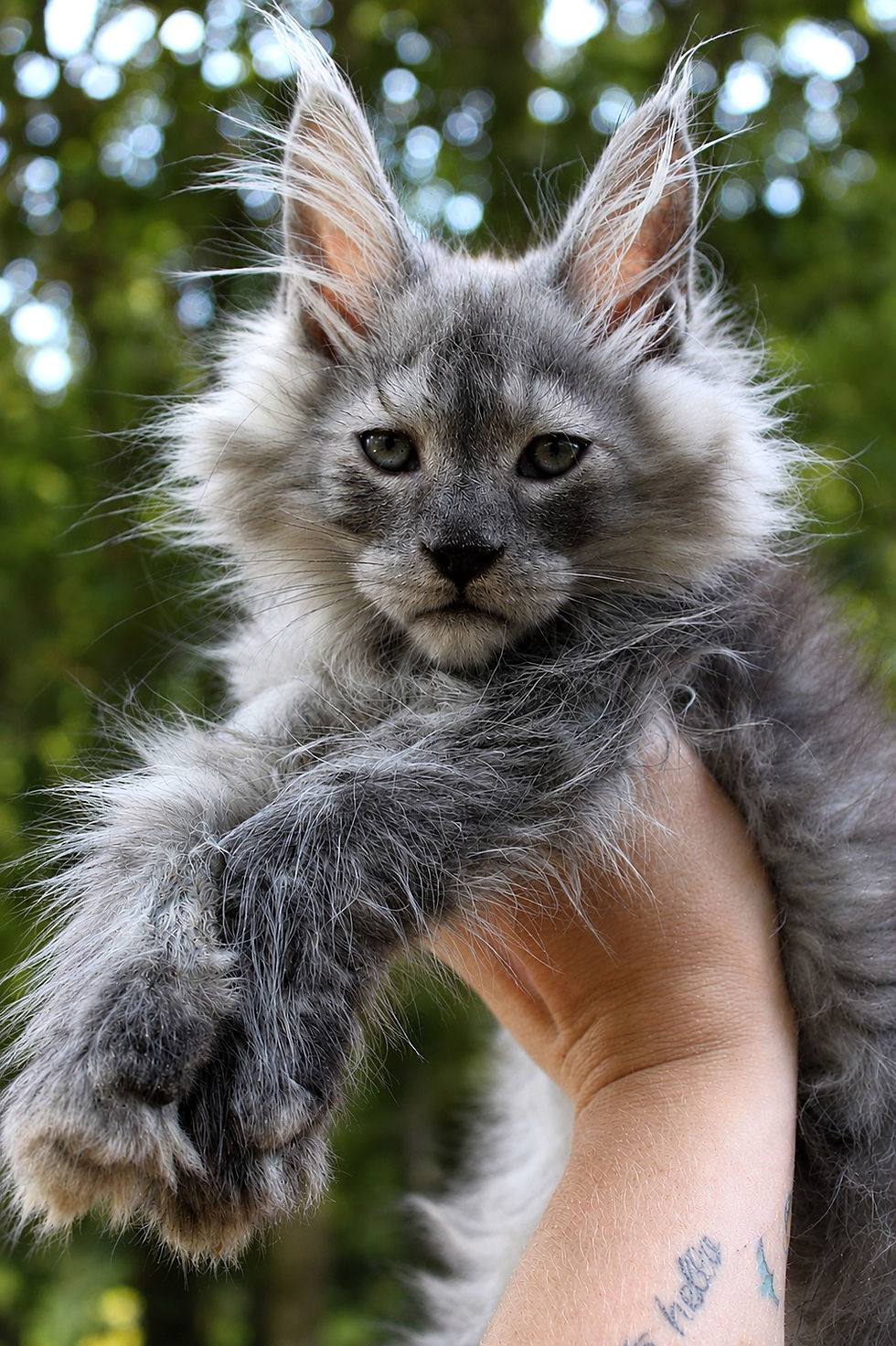


Dominant Blue Eye Maine Coons: The Truth Every Buyer Should Know
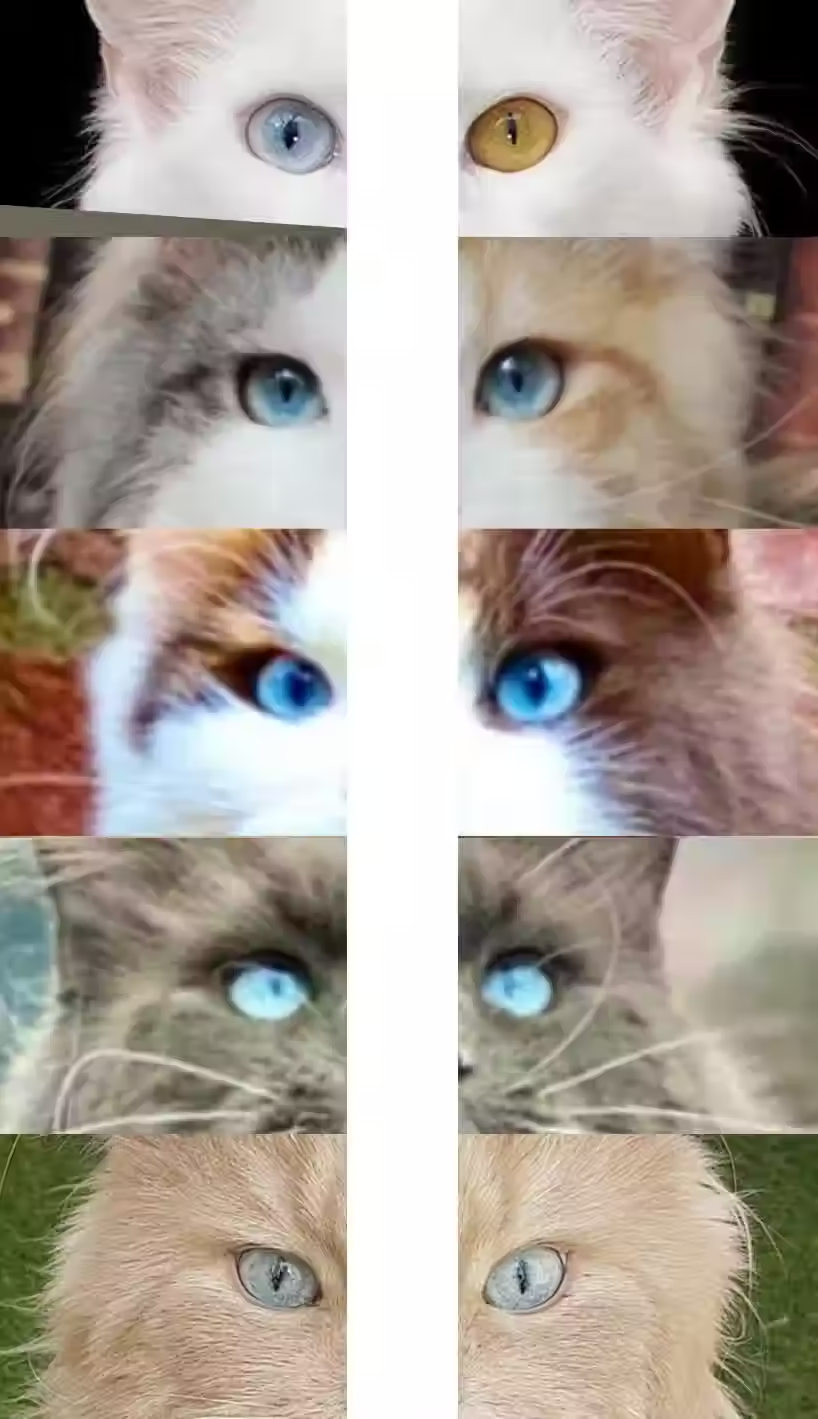
At Elara Eclipse Maine Coons, our mission is to protect the health, integrity, and heritage of the Maine Coon breed. Blue-eyed cats are undeniably beautiful — but when it comes to Maine Coons, not all blue eyes are created equal. Some occur naturally within the Maine Coon breed standard, while others are caused by an introduced genetic mutation known as the Dominant Blue Eye (DBE) gene.
The DBE trait may look stunning, but it comes with serious health risks, is banned by all major cat registries, and raises ethical concerns in the breeding world. Here’s what you need to know before purchasing a “blue-eyed Maine Coon.”
Natural Blue Eyes in Maine Coons
According to TICA (The International Cat Association) and CFA (Cat Fanciers’ Association), accepted Maine Coon eye colors are green, gold, green-gold, or copper. Blue eyes — and “odd eyes” (one blue, one gold or green) — occur naturally only in white Maine Coons or high-white bicolors.
These naturally blue-eyed cats typically lack pigment around the eye area, allowing the blue hue to show. Eye color is closely tied to coat color — if there’s no white fur around the eyes, natural blue eyes are extremely rare.
What Is the Dominant Blue Eye (DBE) Gene?
The Dominant Blue Eye mutation is a man-made genetic introduction, not a naturally occurring Maine Coon trait. Unlike natural blue eyes, DBE can produce blue eyes in any coat color, from solid black to shaded silver.
This gene is linked to Waardenburg syndrome, a condition known to cause:
Deafness (even without white spotting)
Wide-set eyes (telecanthus)
Skull deformities
Facial asymmetry
Misshapen ears
Because of these serious health risks, DBE Maine Coons are banned from registration and showing by CFA, TICA, FIFe, GCCF, and every other major feline registry.
Why DBE Maine Coons Are Controversial
Breed standards exist to protect long-term health, consistency, and structural integrity. Introducing DBE undermines these protections.
Some breeders market DBE Maine Coons as “rare” or “exclusive” while minimizing or ignoring the risks. This puts the responsibility on buyers to research carefully, ask about health testing, pedigree integrity, and the breeder’s ethical intent.

DBE vs. Polydactyl Maine Coons — Not the Same Thing
Some breeders try to justify DBE by comparing it to polydactyly (extra toes). This is misleading.
Polydactyly is a benign structural trait, not a genetic disorder. It has existed naturally in Maine Coons for centuries and, when bred responsibly, poses no health threat.
DBE, on the other hand, is a dominant mutation tied to a medical syndrome, carrying risks of deafness, skull deformities, and other structural defects.
Health Risks of the DBE Gene
Documented risks of DBE Maine Coons include:
Congenital deafness without white spotting
Extreme eye placement (telecanthus)
Facial asymmetry
Abnormal ear positioning
Skull shape deformities
Stillbirths and early kitten death
Breeding two DBE carriers together increases the risk of severe deformities. There is also concern that double copies of the DBE gene may be lethal in utero.
“Isn’t This the Same as Deaf White Cats?” — The Key Difference
White cats with blue eyes can naturally carry the dominant white (W) gene, which also increases deafness risk. The difference is:
The white gene is naturally occurring in Maine Coons and part of the accepted breed standard.
Risks are well-documented and can be managed with BAER hearing testing and responsible pairing.
DBE is not natural to the breed, has less research, more unpredictable expression, and is tied to additional structural and neurological defects.
Why Ethical Maine Coon Breeders Reject DBE
True ethical breeding isn’t about creating a cat that will sell quickly because of a trendy trait — it’s about what’s right for the breed.
At Elara Eclipse Maine Coons, we follow these principles:
Protect the long-term health of the breed over short-term trends.
Maintain structural integrity and adherence to official standards.
Practice transparency with pedigree and health testing.
Avoid mutations known to cause harm.
All major registries agree: DBE Maine Coons are not eligible for registration or showing as true Maine Coons. If a breeder is registering DBE cats as pedigreed Maine Coons, they are misrepresenting the cat’s eye color to the registry — a direct violation of ethics.

Final Word: Health Before Novelty
While DBE Maine Coons may appear visually stunning, the risks outweigh the rewards. Our focus will always remain on producing healthy, well-tempered, breed-standard Maine Coons that will thrive in loving homes for years to come.
At Elara Eclipse Maine Coons, preservation always comes before popularity.