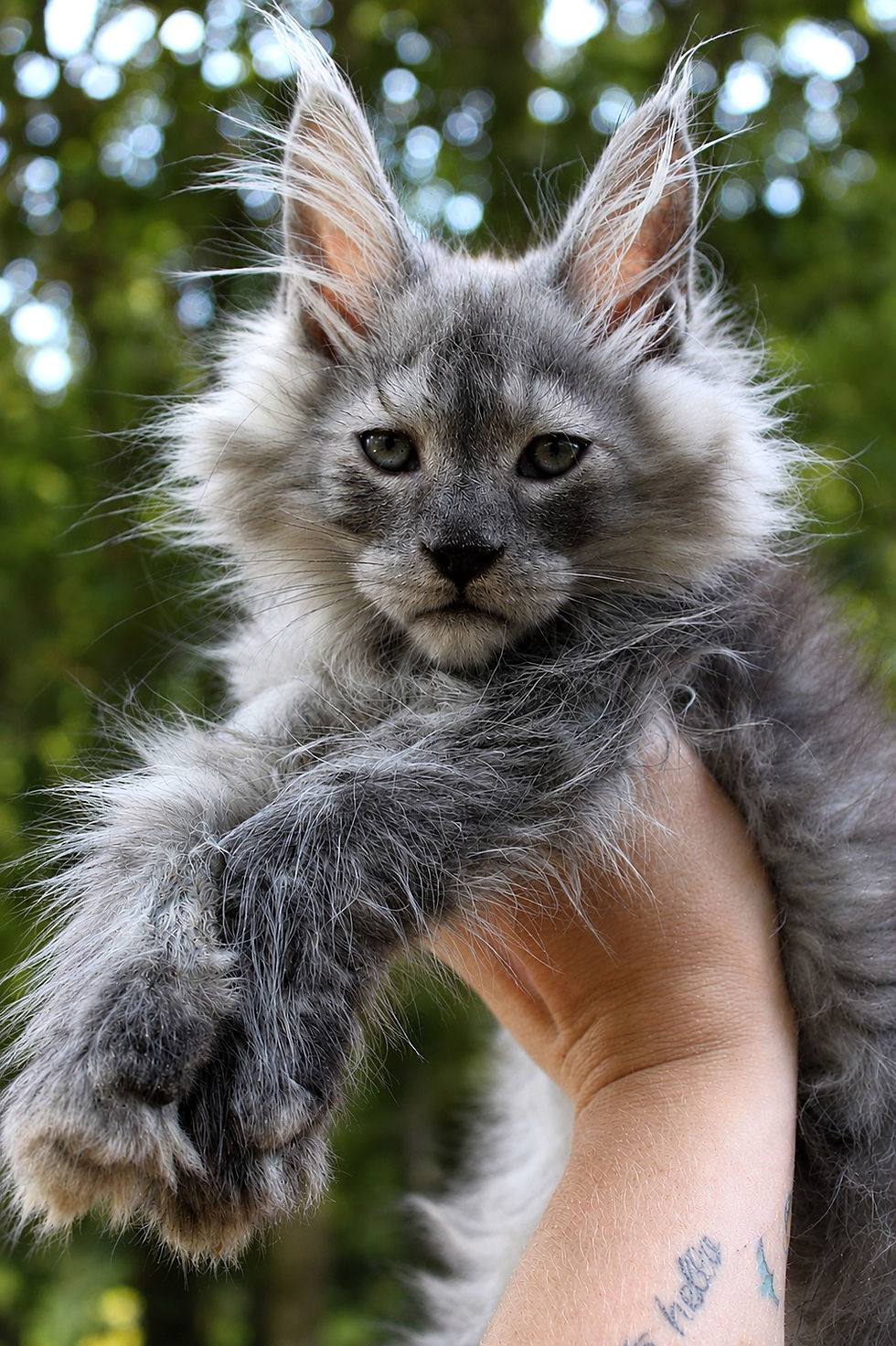


How Big Do Maine Coon Cats Get? Maine Coon Growth, Size & Weight Guide

The Maine Coon is famous for being one of the largest domestic cat breeds in the world. Their impressive size, long bodies, large paws, tufted ears, and flowing coats are some of the characteristics that make this breed so recognizable.
But exactly how big do Maine Coon cats get?
If you are considering bringing home a Maine Coon kitten, one of the first questions you may have is how large that tiny kitten will eventually become.
The answer is important because Maine Coons do not mature like many other domestic cats. They are a slow-growing, slow-maturing breed, and it can take several years for them to reach their full adult size.
At Elara Eclipse Maine Coon Cattery, we believe understanding your Maine Coon's growth is an important part of being a prepared owner. Let's look at Maine Coon size, weight, growth stages, and what you can realistically expect as your kitten grows into adulthood.
How Big Do Maine Coon Cats Get?
Adult Maine Coon size can vary from cat to cat.
At Elara Eclipse, our general adult size expectations are:
Adult males: approximately 18–20 pounds
Adult females: approximately 16–18 pounds
These are general expectations, not guarantees.
A healthy Maine Coon may be smaller or larger than these ranges depending on genetics, sex, overall body structure, nutrition, health, and individual development.
It is important not to judge a Maine Coon's health simply by comparing their weight with another Maine Coon.
Two healthy Maine Coons can have different body sizes and still be perfectly healthy.
How Much Does a Maine Coon Kitten Weigh?
Maine Coon kittens are born small, just like other kittens, but they have a lot of growing to do.
Their weight can vary based on genetics, litter size, sex, nutrition, and individual development.
Rather than focusing on one specific number at one particular age, it is more useful to look at consistent growth over time.
Your breeder and veterinarian can monitor your kitten's growth and help determine whether they are developing appropriately.
A kitten who steadily gains weight, remains active, eats appropriately, and receives regular veterinary care is generally more reassuring than one who is simply being compared to an arbitrary weight chart.
When Do Maine Coon Cats Stop Growing?
One of the most important things to understand about Maine Coon cats is that they mature slowly.
Many domestic cats reach their adult size much earlier than Maine Coons.
Maine Coons can continue developing for several years, with their bodies gradually becoming longer, broader, and more muscular as they mature.
This means you should not look at your Maine Coon kitten and assume their current size tells you exactly how large they will eventually become.
That fluffy little kitten still has plenty of growing to do.
Maine Coon Growth Stages
Understanding the different stages of development can help new owners appreciate just how much their kitten changes.
Birth to 2 Weeks
During the neonatal period, kittens are completely dependent on their mother.
They spend most of their time sleeping and nursing, while their bodies develop at an incredible rate.
The first two weeks are focused primarily on growth, nursing, warmth, and development.
2–4 Weeks
Kittens become increasingly mobile during this stage.
Their eyes are open, they become more aware of their surroundings, and they begin interacting more with their mother and littermates.
Their world starts becoming much bigger.
4–8 Weeks
This is an especially exciting period of Maine Coon kitten development.
Kittens become increasingly mobile, playful, curious, and interactive.
They begin exploring their environment and developing important social skills through interaction with their mother, siblings, people, and surroundings.
Their individual personalities also become much easier to recognize.
8–12 Weeks
By this stage, Maine Coon kittens are becoming much more confident and coordinated.
They are developing stronger social skills, becoming more independent, and learning household routines.
They are still babies, but you can begin seeing more of the individual personality that will continue developing as they mature.
3–6 Months
This is often when owners begin noticing just how quickly their Maine Coon is growing.
Their legs become longer, their bodies become more substantial, and their characteristic Maine Coon features become increasingly noticeable.
Their appetite can also increase as their growing bodies require energy to support development.
6–12 Months
Your Maine Coon may look dramatically larger than they did as a young kitten, but they are nowhere near finished growing.
This remains an important period of physical and mental development.
Their body continues becoming longer and more substantial, while their coat and facial features continue maturing.
1–2 Years
Your Maine Coon is beginning to look much more like an adult cat, but growth and development can continue.
Their frame may continue becoming broader and more muscular.
Their coat may also continue developing in length, texture, and fullness.
2–4 Years
Maine Coons are slow to mature compared with many other cat breeds.
Some individuals continue filling out and developing well beyond their second birthday.
This is one of the reasons Maine Coon owners need patience when waiting for their cat to reach their mature appearance.
Are Male Maine Coons Bigger Than Females?
Generally, male Maine Coons tend to be larger than females, although individual exceptions always exist.
At Elara Eclipse, our general adult size expectations are:
Males: 18–20 pounds
Females: 16–18 pounds
However, weight is only one part of size.
A Maine Coon's overall appearance is also influenced by:
Body length
Bone structure
Muscle mass
Height
Chest width
Head size
Coat length and density
A long-haired Maine Coon can also appear much larger than their actual body weight because of their luxurious coat.
How Long Does a Maine Coon's Body Keep Growing?
Maine Coons are known for their long bodies and substantial frames.
As they mature, you may notice changes in:
Body length
Shoulder width
Chest development
Muscle mass
Leg size
Head shape
Tail length and fullness
Their growth is not always uniform.
You may have a period where your Maine Coon seems to be getting longer and another period where they appear to be filling out.
That is part of normal development.
Why Do Maine Coons Grow So Slowly?
Maine Coons are a naturally large breed with a genetic tendency toward slow maturation.
Their bodies need additional time to develop compared with smaller domestic cat breeds.
This slow growth is one of the reasons Maine Coon owners should avoid trying to force rapid weight gain.
Bigger is not always healthier.
The goal is steady, healthy development rather than trying to make a Maine Coon as large as possible.
Does Feeding More Make a Maine Coon Bigger?
No.
Overfeeding a Maine Coon kitten will not safely make them genetically larger.
Excessive weight gain can place unnecessary stress on a growing kitten's developing body.
Maine Coon kittens need appropriate nutrition to support healthy growth, but feeding more than they need is not a shortcut to producing a larger adult cat.
Your veterinarian and breeder can help you determine an appropriate feeding routine based on your kitten's age, growth, activity level, and individual needs.
Nutrition and Maine Coon Growth
Nutrition plays an important role in healthy development.
Growing Maine Coon kittens need a balanced diet that provides the nutrients necessary for their developing muscles, bones, organs, and immune system.
When bringing home a Maine Coon kitten, it is generally best to continue the feeding routine they are already accustomed to rather than making sudden changes.
If you decide to change foods, transition gradually.
Your kitten's nutritional needs will also change as they mature, which is why regular veterinary visits are important.
How Can You Tell If Your Maine Coon Is Growing Properly?
There is no single weight that every Maine Coon should reach at every age.
Healthy growth should be evaluated based on the individual cat.
Your veterinarian can evaluate:
Weight
Body condition
Muscle development
Bone structure
Appetite
Activity level
Overall health
Regular weigh-ins can also help you notice changes in your kitten's growth pattern.
If you ever have concerns about your Maine Coon kitten's weight or development, your veterinarian should be your first resource.
Maine Coon Size vs. Maine Coon Coat
One interesting thing about Maine Coons is that their coat can make them appear significantly larger than they actually are.
Their long, shaggy coat, large ruff, bushy tail, and ear furnishings contribute to their enormous appearance.
This is why comparing two Maine Coons based only on photographs can be misleading.
One cat may have a particularly dense coat while another has a sleeker coat, even if their actual body sizes are similar.
Does Every Maine Coon Become a Giant?
No.
The term “Gentle Giant” describes the breed's impressive size and wonderful personality, but not every Maine Coon will become an enormous cat.
Genetics play a major role in adult size.
Responsible breeders should not promise a specific adult weight simply because a kitten is a Maine Coon.
A healthy, well-proportioned Maine Coon that weighs less than another Maine Coon is not automatically less valuable or less healthy.
The goal should always be a healthy cat with appropriate body condition and excellent overall health.
Genetics Play a Major Role in Maine Coon Size
A kitten's eventual adult size is influenced heavily by genetics.
The size and structure of their parents and bloodlines can provide clues about what a kitten may eventually become, but genetics cannot guarantee an exact adult weight.
This is another reason responsible breeding is about much more than producing large cats.
A good breeding program should focus on:
Health
Temperament
Structure
Genetic diversity
Breed characteristics
Appropriate development
Size should never come at the expense of health.
Why Maine Coon Kittens Look So Different as They Grow
One of the most fun parts of raising a Maine Coon is watching their appearance change.
Your kitten may go through awkward stages where their legs look too long, their ears seem enormous, or their body appears disproportionate.
Don't worry.
Maine Coon kittens can go through several different growth phases before they develop their mature appearance.
Those oversized ears, giant paws, long body, and fluffy tail are all part of the fun!
Eventually, those “awkward kitten” features begin coming together into the majestic adult Maine Coon everyone recognizes.
Maine Coon Growth: The Big Picture
Maine Coon cats are large, slow-maturing cats that require patience as they develop.
At Elara Eclipse Maine Coon Cattery, our general adult size expectations are approximately:
Males: 18–20 poundsFemales: 16–18 pounds
But remember that these are general ranges, not promises.
Your Maine Coon's adult size will depend on their individual genetics, sex, body structure, nutrition, health, and development.
The most important thing is not producing the heaviest Maine Coon possible.
The goal is a healthy, well-proportioned, happy Maine Coon who develops at an appropriate pace.
And perhaps the best part?
That tiny kitten you bring home today has years of growing, maturing, and becoming the magnificent Gentle Giant you imagined ahead of them.
Frequently Asked Questions About Maine Coon Size
How big do Maine Coon cats get?
Adult Maine Coon males at Elara Eclipse generally reach approximately 18–20 pounds, while females generally reach approximately 16–18 pounds. Individual cats can vary.
What is the average weight of a Maine Coon?
Maine Coon weight varies by sex, genetics, body structure, and individual development. At Elara Eclipse, our general adult size expectations are 18–20 pounds for males and 16–18 pounds for females.
At what age do Maine Coons stop growing?
Maine Coons mature slowly and may continue developing for several years. Many do not reach their full mature size as quickly as smaller domestic cat breeds.
Are male Maine Coons bigger than females?
Generally, yes. Male Maine Coons tend to be larger and heavier than females, although individual variation is normal.
How fast do Maine Coon kittens grow?
Maine Coon kittens grow rapidly during their first year, but they continue maturing and filling out well beyond kittenhood. Their growth rate can vary considerably between individual cats.
Can you make a Maine Coon grow bigger by feeding more?
No. Overfeeding cannot safely increase a Maine Coon's genetically determined adult size and can contribute to unhealthy weight gain. Proper nutrition should support steady, healthy development.
Why are Maine Coon cats so large?
Maine Coons are naturally a large, slow-maturing breed. Their genetics contribute to their substantial body structure, long bodies, large paws, and impressive adult size.
Is a smaller Maine Coon unhealthy?
Not necessarily. Maine Coon size varies between individuals. A healthy cat should be evaluated by body condition, muscle development, overall health, and veterinary assessment rather than weight alone.